- Next season
1-4 of 4
-
Winter is Sake Season on Sado Island
Sado is famous for its great sake, so you might say a visit to Sado Island is incomplete without a sake tasting. This is especially true in winter! Rice is harvested in Autumn and sake brewing traditionally begins in winter when fermentation works best at a constant, cold temperature. Back in the Edo period, when there was no refrigeration, winter-brewed sake fetched the highest prices – colder temps meant higher quality sake. Nowadays, the strong tradition of brewing sake in winter still exists.When did Sake Brewing Begin on Sado Island?The earliest mention of sake brewing on Sado dates back to the Jokyo Era (1680’s), when the Yamamoto family purchased a share in a liquor store in Mano Shinmachi. However, sake was likely produced long before that, given the advanced rice cultivation that was fostered by many noble families who had been sent to Sado from ancient times. It was during the Edo period (1603-1867), when the gold mines were flourishing, that sake production truly began to thrive, with over 200 breweries in operation at one time. On Sado, there are still sake breweries that have been in operation for over 100 years.How is sake brewed?Sake brewing is a complex process. First, rice has to be grown, harvested, and processed. Then it has to be polished and washed, steamed, spread onto trays to cool and then sprinkled with koji mold, then mashed, fermented and pressed. Visiting the sake breweries offers a fascinating glimpse into this craft. Many of the island's sake makers still use traditional wooden tools to create their unique sake. In winter, the breweries are in full swing, and visitors can see firsthand how the brewing process comes to life.Sake Brewery Tours and Tastings on Sado IslandSado has five active sake breweries that you can visit on the island. Breweries Tenryohai Shuzo, Henmi Shuzo, and Hokusetsu Shuzo offer tours for guests who make a reservation in advance. Here’s the rundown: Obata ShuzoFounded in 1892, Obata was the first brewery open to the public in Niigata Prefecture. They are well known for their ‘MANOTSURU’ brand of sake. On top of their regular brewery, they have also renovated Former Nishimikawa School into a sake brewery and training center ‘GAKKO GURA’, where trainees can come to learn how to brew sake from start to finish. The grounds also have a cafe open to the public with a beautiful view of the sea of Japan. Take a Brewery Tour and Taste Sake with a magnificent view!Obata Shuzo BreweryFind on Google MapsOpen: 9:00 – 16:00, daily, free tastings available.Tours: No brewery tours currently offered.For More information: Gura CafeFind on Google MapsOpen: Thurs - Sun 11:00 – 16:00Book Online 3 days in advance for a Sake Tasting and Brewery Tour: Sake Tasting and Brewery Tour at Gakko GuraHokusetsu ShuzoFounded in 1871, Hokusetsu is particularly noted for its smooth, balanced flavors and a wide variety of top-class sake, including both junmai and daiginjo types. Hokusetsu is a favorite of Hollywood star Robert De Niro, and is served at the Nobu chain of Japanese restaurants, which are popular dining spots for celebrities around the world.Find on Google MapsOpen: 8:00 – 17:00 daily.Tours: Call 0259-87-3105 directly a day in advance to schedule (tours can be scheduled between 9:00 – 16:00).For More Information: ShuzoFounded in 1872, Henmi is the smallest of the sake breweries on Sado Island, but what it lacks in size it makes up for with a passion for innovation, producing a smooth and refined range of sake that reflects the unique characteristics of the island’s environment.Find on Google MapsOpen: 9:00 – 16:00 dailyTours: Call 0259-55-2046 directly in advance to schedule.For more information: ShuzoTenryohai takes sake brewing seriously, producing quality sake through the daiginjo method. Sado Island’s rich agricultural heritage and unique climate contribute to the distinct flavors of their sake – they use clear water that flows from the Osado Mountain Range and locally-grown koshihikari rice to make their sake.Find on Google MapsOpen: 9:00 – 17:00 dailyTours: Reservation in advance required by 5:30pm two days priorFor more information, and to reserve a tour: ShuzoFounded in 1915, Kato Shuzo’s pride is their sake Kintsuru, a local favorite. They make a total of 12 types of sake, with 70% of their annual production being distributed on Sado Island itself. Free tastings are available at their showroom.Find on Google MapsOpen: 9:00 – 18:00, daily.Tours: No brewery tours currently offered.For more information: t0ki BreweryFor something a little different, check out Sado’s craft beer! t0ki offers limited edition beers in their taproom, brewed right here on Sado Island. You can also get a peak inside the brewing room through the glass viewing area from the taproom.Find on Google MapsOpen: Weekends onlyFriday 12:00 – 20:00Saturday 10:00 – 20:00Sunday 10:00 – 18:00 Pick up a Sake Souvenir at Ryotsu PortOn your way off the island and on to your next part of your journey, why not stop by the shops in the Ryotsu ferry terminal to pick up some sake! You can even do tastings. Check out the new Sado Sake Port, managed by Tenryohai Brewery. There is also a sake tasting server in the souvenir street of Sado Kisen, where you can taste sake from all five of Sado's breweries!Exploring the Island’s Scenic Beauty in WinterWhile the sake breweries are a highlight, there’s more to explore on Sado Island during the winter season. Check out our list of 10 Winter Adventures on Sado Island to see more - The island’s low-lying hills are perfect for winter hikes, where visitors can take in the crisp air and panoramic views. Snow-capped mountains offer opportunities for winter sports, and birdwatching is a popular activity, with species like the Japanese crested ibis being commonly spotted.Whether you're a sake aficionado, a nature lover, or simply someone looking to escape the hustle and bustle of city life, Sado Island offers a truly unique winter escape where you can slow down, relax and indulge in the timeless charm of this hidden corner of Japan.
-
10 Winter Adventures on Sado Island
Most people flock to Sado in the warmer seasons, but a winter visit can be fun, too! You can expect fewer tourists, a peaceful atmosphere, fresh seafood, and snowy scenery. Here's a quick round-up of 10 Winter Adventures to make the most of a trip to the island during the colder months.1. Stay at a Cozy Ryokan Hotel & Enjoy Local Winter CuisineThe best way to enjoy the local cuisine is to stay at one of the many Ryokan (Japanese-style hotels) around the island that offer breakfast and dinner. Seasonal ingredients in winter include fresh oysters farmed in Lake Kamo and Mano Bay, and snow crab landed in Akadomari. Kan-buri (winter yellowtail) is another favorite. For vegetarians, Sado has a bounty of fresh fruit and veg – try the locally grown mushrooms, persimmons, pears, apples, and bamboo shoots. Plus, what better way to warm up in the cold winter months than with a dip in an onsen? Some Ryokan even offer a private attached bath. See a list of accommodations here.2. Make your Own Traditional CraftsTry your hand at the arts of Sakiori and Warazaiku on Sado Island. Sakiori is a traditional art form that involves weaving strips of old cloth on a loom called a Nemaribata. The Traditional Skills Museum in Aikawa offers workshops where you can learn from local weaving artists. (Reservations in advance are required for the winter months.) Warazaiku is the art of crafting rice straw. This handicraft is deeply rooted in everyday life on Sado Island: performers of the traditional masked deity drum dance, ‘Onidaiko,’ traditionally wear rice-straw sandals during rituals. In the rice straw art experience on Sado Island, you can learn how to create your own rice straw art directly from local artisans. Make items like decorative wreaths, coasters, pot stands or traditional Japanese sandals.3. Stroll Around Shukunegi VillageWinter can be a good time to take in the deep history of Sado Island. For those who want to know the cultural heritage of the island deeply, it’s best to hire an English-speaking guide (See a list of guides here) For those who prefer to explore on their own, mark the following down on your map! On the southern tip of Sado Island, about an hours’ drive from Ryotsu Port, lies Shukunegi Village, an old shipbuilder’s town characterized by its crowded rows of over 100 houses built with ship planks and donned with stone-mounted roofs. Designated a Preservation Area for its traditional Architecture, it is fascinating to walk the narrow alleyways of this historical village and imagine what it was like in its heyday when Shukunegi was a high-traffic port for kitamaebune ships traveling north to Hokkaido.4. Explore Ogi Folk MuseumHighlights here include climbing aboard and exploring the interior of a real-life size sengokubune (wooden freight ship) that was built in 1858 in Shukunegi. The museum also exhibits over 30,000 folk materials from around South Sado that you can view up close and in person. The museum is like a time capsule treasure chest filled to the brim, it’s fun to see what you can find.5. See the Sado Gold MineA visit to Sado wouldn’t be complete without stopping by the UNESCO World Cultural Heritage Site, Sado Gold Mine. Here you can explore two mine tunnels that show the remnants of the past – from the time when gold was mined by hand over 400 years ago, to the more modern history of the mine in the Meiji era of Industrialization. *note that in winter of 2025-2026, the Gold Mine will experience closures due to renovations. Please check here for exact dates.6. Tour the Island’s Powerspots Covered in SnowMyosenji Temple is home to the only 5-story pagoda in Niigata Prefecture, which was impressively built by two master carpenters with not one nail or screw in the entire structure. The temple was established around 1278 by a monk of Nichiren Buddhism. Formerly a samurai warrior in Kyoto, he came to Sado accompanying the exiled Emperor Juntoku. The grounds are a calming and peaceful sanctuary, made even more beautiful with a light dusting of snow in the winter months.Seisuiji Temple was established in 808 making it Sado’s oldest temple of note. It feels like forest sanctuary, lined with cedar trees that are several hundred years old, and located on a small mountainous hill surrounded by countryside and rice fields. It may be an interesting visit for travelers who have already crossed the ancient capital of Kyoto off their list. It was built by order of Emperor Kammu as a kind of ‘miniature replica’ of Kyomizu-dera Temple in Kyoto. Even the kanji (Chinese characters) for the temples are identical, with different readings - 「清水寺」.7. Explore the Snowy Outdoors with a Snowshoe HikeFor those who want to get outside in nature, Sado offers snowy hillsides, forests, and even skiing. Go for a guided snowshoe hike to a frozen waterfall with Local guide Hiro-san. See his tour details here (in Japanese only) or reach out to him on Instagram directly.You can also go for a hike on one of the trails in the Osado Mountain Range, a stunning beauty with snow-capped mountains and views of the sea of Japan. Some hiking routes are still accessible in winter, so you can bring your own snowshoes (or rent them for 1,000 yen a day at Sado Outdoor Base) and safety equipment to go on a winter hike – but do so at your own risk as routes are not patrolled, and the mountains in Sado in winter generally go untouched. By the end of February, trees on Sado’s highest peak, Mt. Kinpoku, are typically completely covered in snow.8. Adventure to one of Japan's most remote Ski SlopesThe local Daira Ski Area on Sado is tiny, with only one lift, but it is has cred as the only pair ski lift on a remote island in all of Japan. Season start and end is highly variable depending on the snow conditions each year. A day ticket will run you just 2,000 yen (around $13 USD), and rental equipment and gear are available. In general, Daira is open Thursdays to Sundays and on national holidays until the end of February. If you catch it at the right moment in the season, you might just get to experience Sado's powder! Note: to drive up to the ski area, you'll need chains on your tires - or park at Kanai community center and take the shuttle bus (phone reservations required in advance).9. Take a Dip in a Natural Hot SpringAfter all the fun in the cold outdoors, what better way to warm up than soaking in a local Hot Spring? Since the hot springs in Sado are close to the sea, most of them are sodium springs. You can find day-use onsen facilities across the island at the following locations (mainly inside hotels/ryokans). See here for a list of onsens to take a dip in!10. Taste the local Sake For the Sake LoversSado is renowned for its rich sake brewing tradition, so why not tour the island's Five Sake Breweries while you are visiting? While all are celebrated for their commitment to traditional brewing methods, and for the use of high-quality local rice, each has its own distinct style and methods, producing a range of refined sake that reflects Sado’s cultural heritage and pristine natural environment. In winter, the colder temperatures influence the brewing process, allowing for a slower fermentation that can result in richer, more complex flavors. Explore the breweries, enjoy free tasting and learn more about the brewing process. Here's the lineup: Hokusetsu Shuzo, Henmi Shuzo, Tenryohai, Kato Shuzo, and Obata Shuzo. For something a little different, check out Sado’s craft beer at t0ki Brewery. They offer limited edition beers in their taproom, brewed right here on Sado Island.Are you feeling excited for a winter adventure on the island? One thing to keep in mind that only Ryotsu and Niigata ports are in operation during winter (no ferries run to Ogi port). During the months of December, January and February, the Sea of Japan has a tendency to get wild and unstable, with waves that can reach up to 6m high. You’ll want to be aware that when a storm hits, travel to the island can mean a bumpy ride on the Car Ferry, and Jet Foil ferries often experience cancellations. And another note on getting around on the island itself - travel by local bus is possible, but with limited routes and departures, you’ll find it more convenient to either rent a car or hire a charter taxi. (Do note the mountain roads that are closed in winter). So, Sado is definitely an off-the-beaten-track treasure – especially in the winter time, but we think it’s worth the adventure!
-
Experience Noh Theatre on Sado Island
Sado is a great place to experience the captivating world of Noh theatre! Noh (能) is a form of classical Japanese performing art that combines drama, dance, singing and instrumental accompaniment with myths and legends as its main theme. Performed in Japan since the 14th century, it is characterized by its elegant costumes, mesmerizing masks, and poetic storytelling. On Sado, you can see Noh performed at local shrines, outdoors by the light of bonfires.Noh has been cherished for generations on Sado Island, and the island has over 30 Noh Stages, and about 20 plays are still being performed each year. Noh uniquely evolved to be an art form dedicated at shrine festivals. While Noh in mainland Japan was originally meant to be enjoyed by the upper warrior class exclusively, on Sado it was opened up to a wide audience, including the common people, and became known as "the people's Noh."Noh Performances on Sado in 2024A shuttle bus will be run by Niigata Kotsu for select performances that will take you from lodging facilities in the vicinity to the venue. This bus will be available for the ■ Tenryo Sado Ryotsu Open Air Noh on 7/6(Sat)、9/7(Sat)、and 10/5(Sat). See here for more information.DateEventVenueProgramFeeTimeJuly 6 (Sat)Tenryo Sado Ryotsu Fire-Lit Open Air NohShiizaki-Suwa ShrineAkogi2,000 yen19:30July 28 (Sun)Noh Performance at Honma Family's Noh StageHonma Family Noh StageHashitomiFree15:30August 18 (Sun)Zeami Memorial FestivalKanai Noh GakudoTBDFree11:00August 24 (Sat)Niku Shrine's Evening Noh PerformanceKanai Noh GakudoShojoFree19:00 *Onidaiko from 18:00August 25 (Sun)Kamo Shrine's Evening Noh PerformanceKamo ShrineTBDFree18:00 *Mabayashi from 15:30 - 17:30September 7 (Sat)Kusakari Shrine's Evening Noh PerformanceKusakari ShrineTBDFree18:00September 7 (Sat)Tenryo Sado Ryotsu Fire-Lit Open Air NohShiizaki- Suwa ShrineNue2,000 yen19:30October 5 (Sat)Tenryo Sado Ryotsu Fire-Lit Open Air NohShiizaki-Suwa ShrineUkai3,000 yen19:30Fire-lit Outdoor Noh Theatre on Sado IslandAnyone can enjoy the beautiful art of Noh - even if you don't understand Japanese! This is especially true on Sado Island, where the majority of performances are held outdoors in the evenings and the atmosphere of the performance is half of the magic. It is a special treat to sit with an audience of locals and see a fire-lit Noh performance. As the fires crackle, and the sun sets, you are surrounded by darkness and the performance solemnly begins on the historic stage of a local shrine. The surrounding nature, the sounds of insects, breezes rustling the leaves and branches, and glimpses of the moon, give added impact, making the show even more dramatic. For the full experience, check out the performances below marked 'Fire-Lit Open Air Noh.'Tour the Noh Stages on Sado IslandIn addition to seeing an actual Noh performance, tour around and see all the Noh Stages on Sado Island! At one point in time,there were over 200 Noh stages on the island! Today, one third all of the remaining Noh stages in Japan are located on Sado Island - more than 30 stages. Eight are in active use for performances. See here to read more about Noh on Sado
-
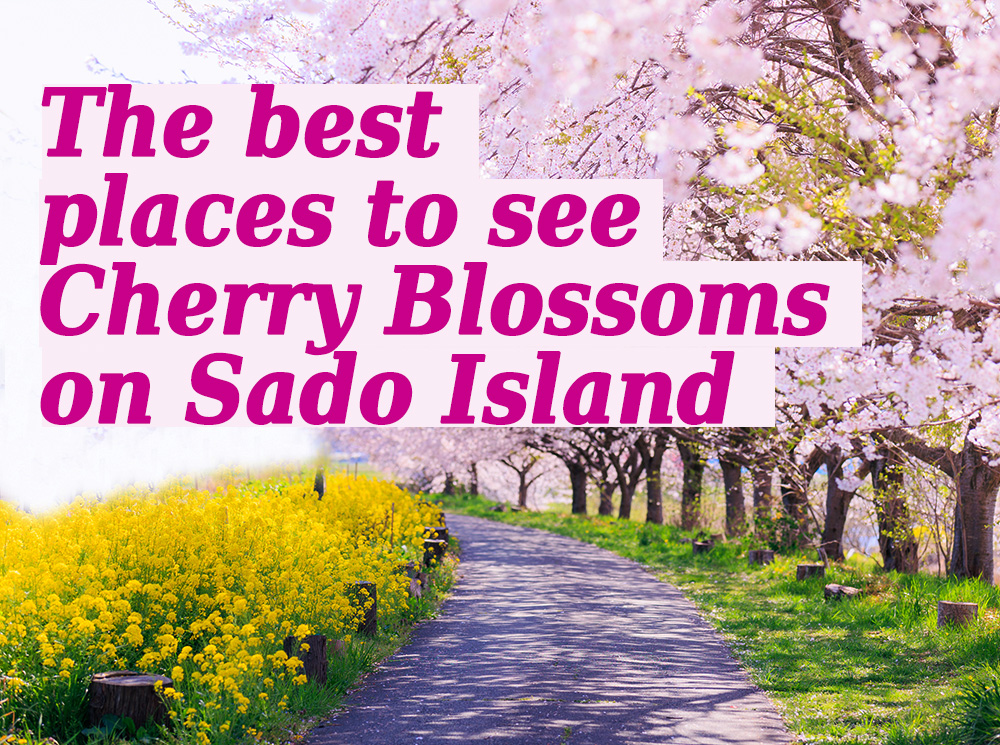
The best places to see Cherry Blossoms on Sado Island
Welcome to Sado Island, a hidden gem in Japans landscape that comes alive with a burst of color every spring. Known for its rich cultural heritage and stunning natural beauty, Sado Island is a great place to escape the tourist crowds of larger cities and enjoy Japans Sakura (cherry blossom) season. There are numerous flower spots scattered around the island that you can explore, so get your camera and a picnic ready! In this blog post, well take you on a virtual tour of some of the best cherry blossom viewing sites on Sado. Spot #1: Sado Gold Mine ParkThis historic site is a very popular place to see cherry blossoms. The road up to the Gold Mine and around the grounds is lined with the trees. The blossoms are also lit up at night during the height of the season. In 2025, the light-up event is planned for April 4th - April 20th, in the evening hours of 19:00 - 21:30. Address: 1305 Shimoaikawa, Sado, Niigata 952-1501By Bus: right in front of Kinzanjaya-mae (main line) Spot #2: Mano ParkMano Park is the perfect place for a picnic, and with about 2000 sakura trees, this is Sado’s premiere cherry blossom viewing spot! You can also visit Mano Shrine, dedicated to Emperor Juntoku. Come visit after sundown, when the trees are illuminated for night-time cherry blossom viewing, known in Japan as yozakura. The light-up at Mano Park in 2025 will be held until April 20th from 17:30 - 21:00. Address: 655 Mano, Sado, Niigata 952-0313By Bus: 3 minutes walk from Manomiya-mae (Akadomari Line), 20 minutes walk from Mano Goryo Entrance (Ogi Line), and directly in front of the Sado History and Legend Museum stop (Ogi Line - on Saturdays and Sundays only). Spot #3: Niibo DamEnjoy some 1,500 cherry trees spanning around 20 varieties. Niibo dam is definitely one of Sado’s top cherry blossom viewing destinations. In spring, the area bustles with photographers and picnickers coming to enjoy the flowers. Address: 1072-1 Kaminiibo, Sado, Niigata 952-0108By Bus: 30 minute walk from the Ryokomura Uryuya bus stop Spot #4: Shiroyama Park (Ogi)Ogi is the southern gateway to Sado Island, and once prospered as a gold and silver shipping port and port of call for Kitamaebune ships during the Edo period. Shiroyama Park is located on a hill where you will find about 500 cherry trees. It is also where the “Kodo: Earth Celebration” was originally held annually in late August. Address: Ogi, Sado, Niigata 952-0604By Bus: 15 minutes walk from Ogi (Ogi Line) Spot #5: Lake KamoJust a few minutes walk from Ryotsu Port, Lake Kamo is the biggest lake in Niigata Prefecture, and one of the most picturesque spots in Sado, with sections of the promenade lined with cherry trees. A great way to take in the views is by renting an e-bike in Ryotsu from Sado Outdoor Base and cycling around the circumference of the lake. For more details on E-bike Rentals: Outdoor Base For more details on the route: Lake Kamo Course Spot #6: Tanemaki Sakura (Hojobo temple in Hamochi Osaki)This beautiful rosebud cherry tree, the Tanemaki Sakura, is about 20m high and 6.9 meters in circumference at its base, and is estimated to be over 250 years old! Legend has it that the former chief priest of Osaki’s Uenobo Temple retired to Hojobo Temple in his later years, and when he traveled around the country as an ascetic, he bought a cherry seedling in Yoshino and brought it back here. Address: 1167 Hamochi Osaki, Sado, Niigata 952-0252By Bus: 15 minutes walk from Ogi (Ogi Line) Spot #7: Shinbo Hachimangu Shrine Check out the beautiful path up to this shrine lined with cherry blossoms. There is also a festival held here every April 15th where you can see Onidaiko drumming and other traditional arts! Timing your visit with the Taiko Drumming Festival adds an extra layer of cultural richness to your cherry blossom experience. Address: 1109 Kanai Shinbo, Sado, Niigata 952-1208By Bus: 3 minutes walk the Undo Koen Mae bus stop (Honsen Line) Spot #8: Karasaki Shrine (Yoshii) You’ll notice the bright pink cherry blossoms that line the long path up to this small shrine’s gate, visible all the way from the main highway. Take a moment to reflect as you witness the harmonious blend of natural beauty and spiritual tranquility. Address: Yoshiihongo, Sado, Niigata 952-1202By Bus: 3 minutes walk the Yamato bus stop (Honsen Line) ConclusionSado Island's cherry blossom spots are the perfect place for a sensory journey through history, culture, and nature, away from the crowds of the mainland. Whether you're a solo traveler seeking tranquility or a group of friends ready for a picnic party, Sado Island caters to all. So, pack your bags, grab your camera, and explore all the blooming sakura Sado Island has to offer!