

- How to enjoy Sado Island
- Traditional Culture on Sado Island
- Singing, Dancing, and Performing at Festivals
Most of the festivals are held in spring and autumn, when people offer prayers for good crops and show gratitude for rich harvests to deities and ancestors. Sado has numerous small communities, and the festivals are as varied as the villages. Join in the festivities like a local when residents gather to offer songs and dances.
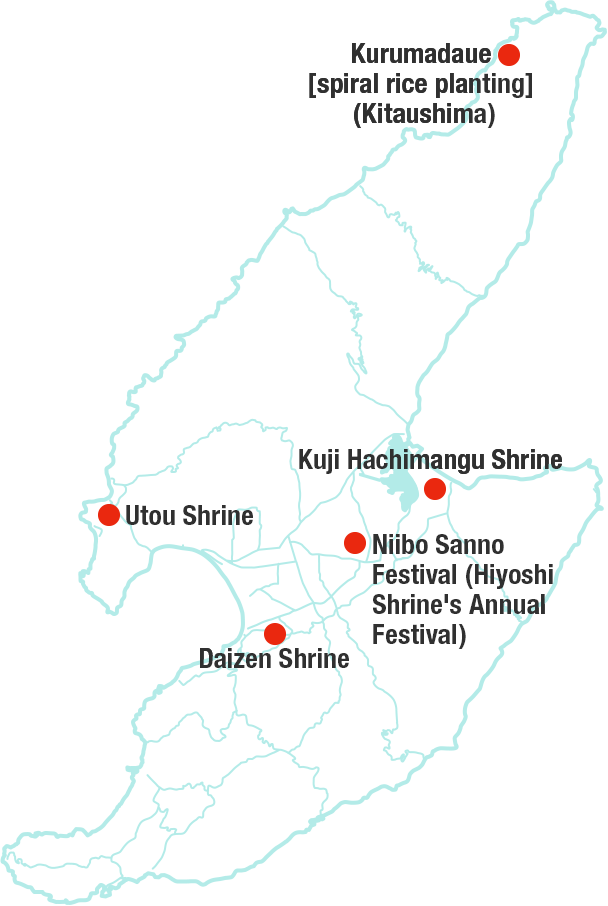
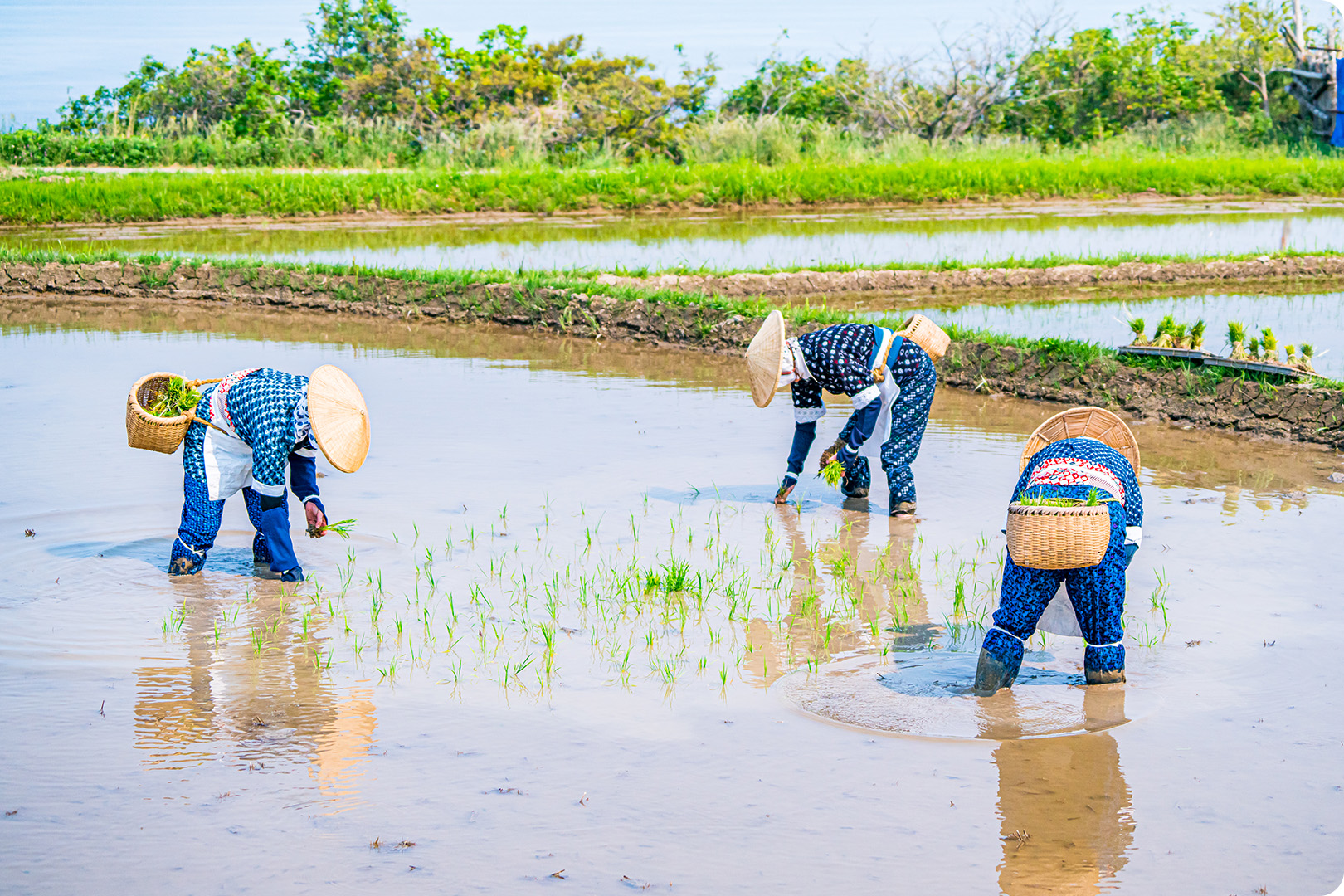
Planting seedlings in a clockwise spiral starting in the middle of the paddy is believed to create a path for deities to descend into.
-
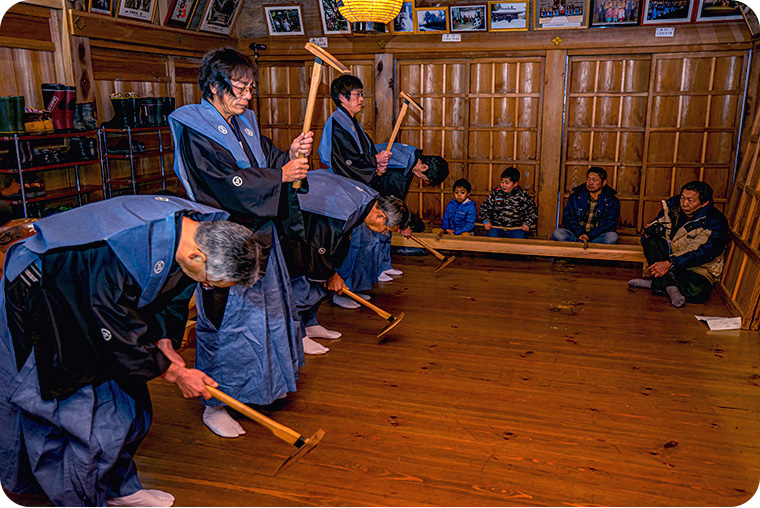
Otaue Rice Planting Festival at Gosho Shrine in Shimokawamo (Prefecturally-designated Intangible Folk Cultural Property)
Held annually on February 6th
-
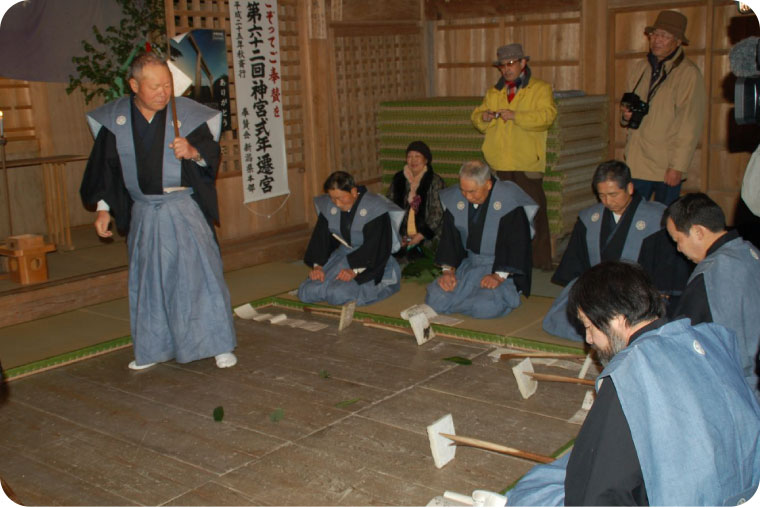
Rice-field Fun Ritual (ta-asobi shinji: Prefecturally-designated Intangible Folk Cultural Property)
Held annually on January 3rd
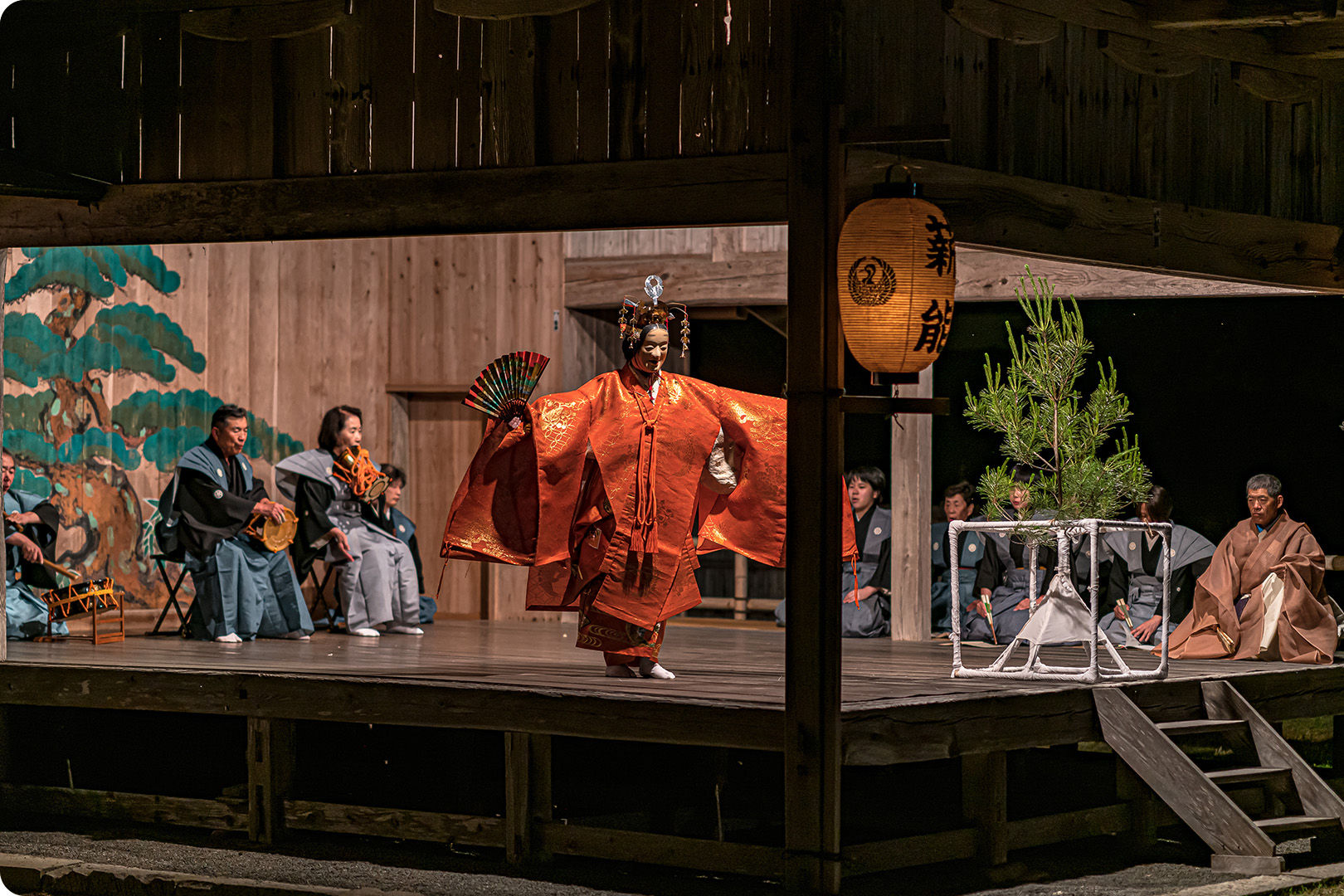
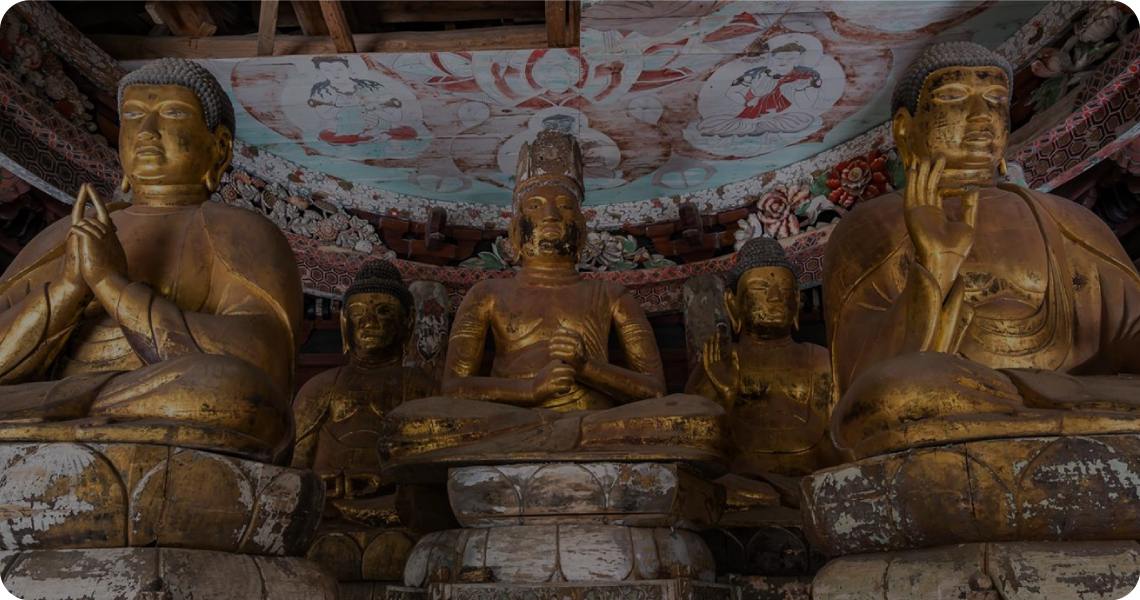
Noh Stage at Daizen Shrine (Prefecturally-designated Tangible Folk Cultural Property) Reconstructed in 1846. It is believed to be the oldest existing Noh stage on Sado Island, based on the record of ink writing left on the old back wall.
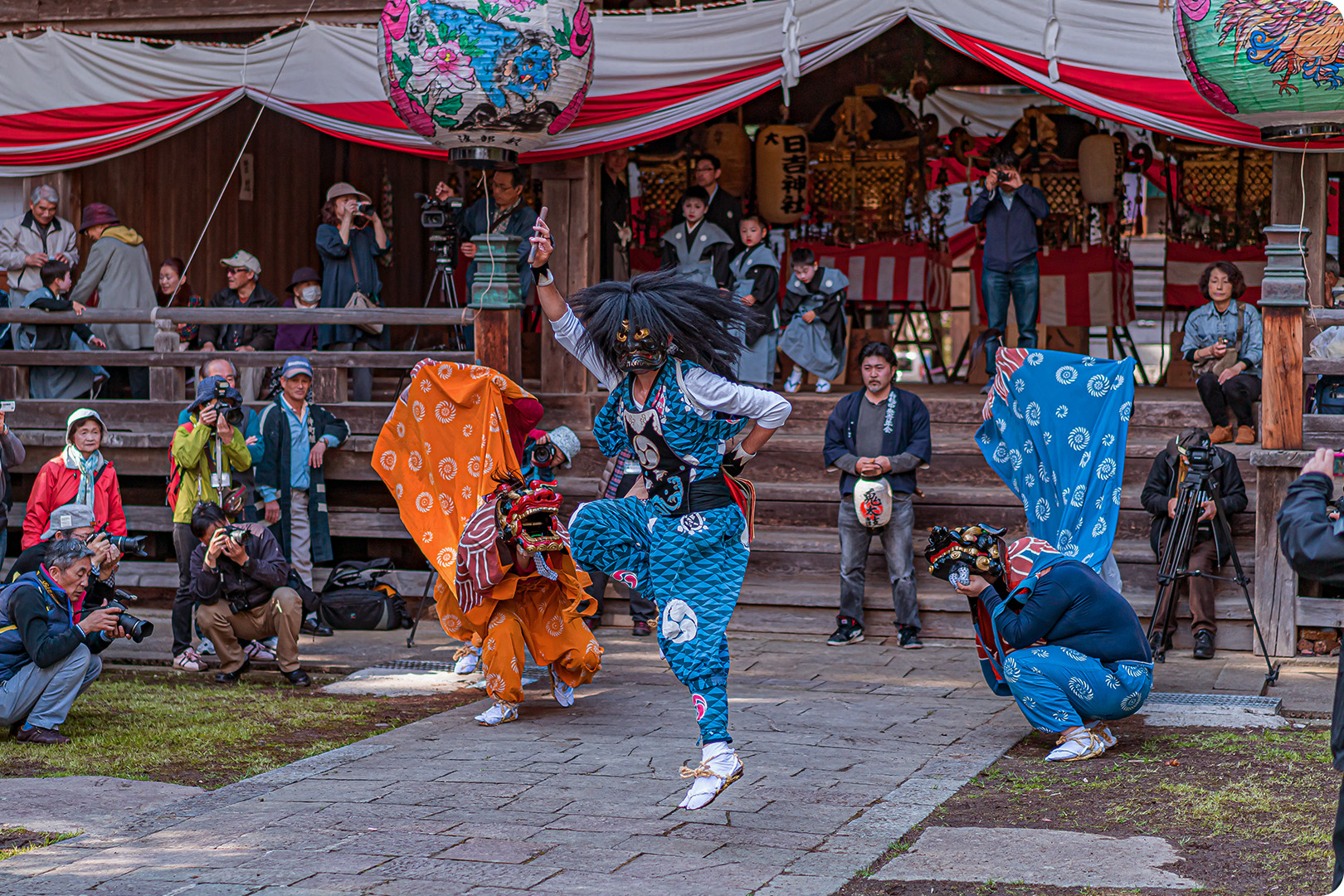
Onidaiko, a dynamic drum performance is dedicated in front of the Niibo Hiyoshi Shrine.
-
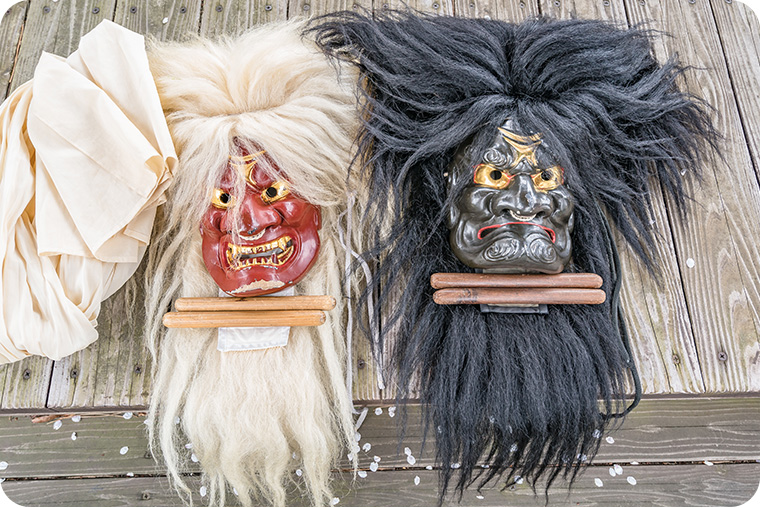
Deity masks carved by sculptors
-
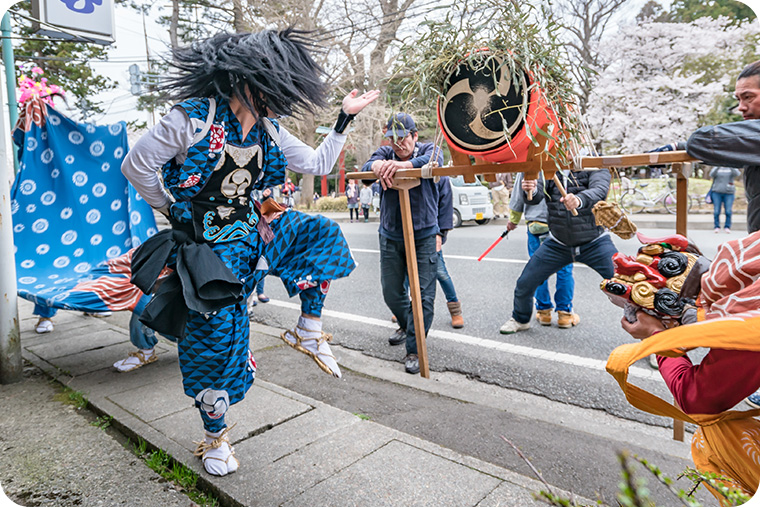
Deity mask dance and shishimai (lion dance) groups visit door-to-door in the neighborhood
-
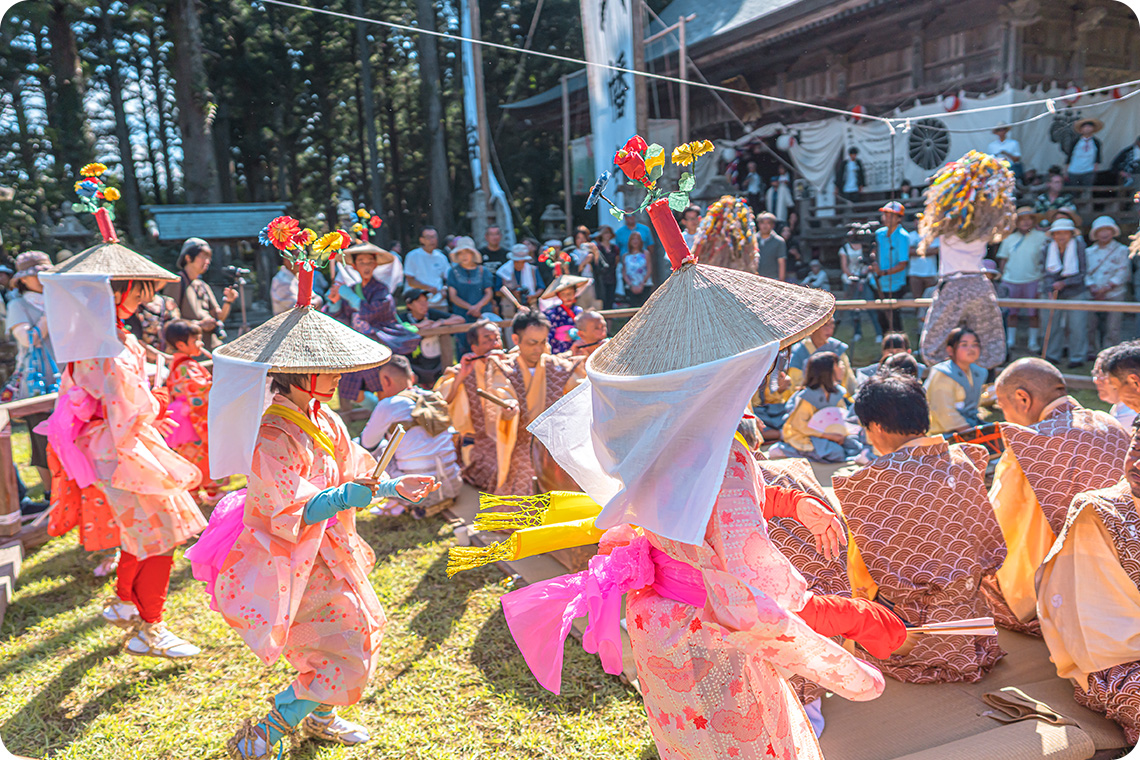
A traditional event reminiscent of a picture scroll from the Middle Ages (Sado-designated Intangible Folk Cultural Property)
Kuji Hachimangu Shrine Festival
Kuji Hachimangu Shrine
This is a festival with a long history recorded in a document compiled in 1405. The festival begins with attendants and archers staying overnight at the shrine on September 13, followed by a pre-festival event on the evening of the 14th. The main festival, on 15 September, includes rituals held at the big hall, seawater scooping, a portable shrine parade and archery on horseback. Three neighbouring communities dedicate performances such as 'to-to' (sword dance), Ondeko (deity mask dance) and Hanagasa Odori (flower hat dance: Prefectural Designated Intangible Folk Cultural Property).
Place: Shimokuji, Sado City
Information: Currently, the main festival is held on a Sunday closest to September 15.
-
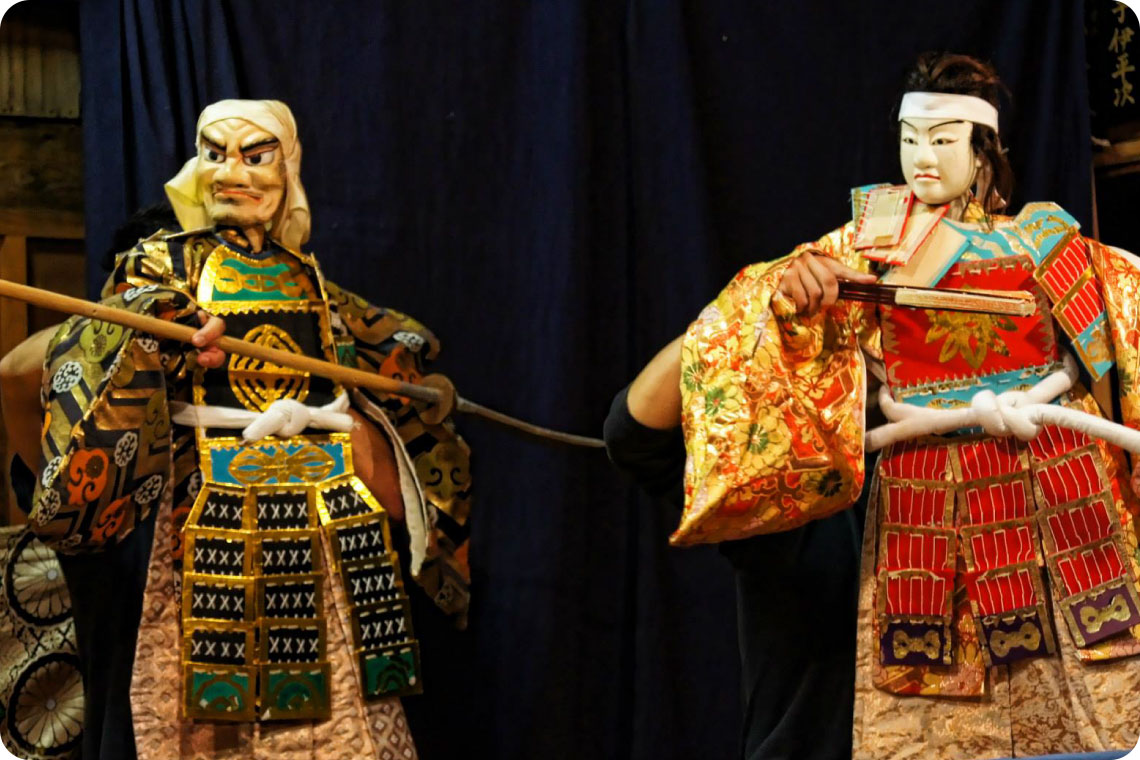
Popular entertainment enjoyed by islanders (Designated National Important Intangible Folk Cultural Property)
Puppet Theatre on Sado Island
Bunya, Sekkyo, Noroma puppet theatres
Puppetry on Sado has developed uniquely based on the old Joruri style. One puppeteer manipulates one puppet, unlike Bunraku where each puppet requires three puppeteers to operate it. Bunya puppet drama is performed in the style derived from the dramatic bunya-bushi narration in Kyoto, accompanied by a shamisen (three-string lute) player who is also a narrator. Sekkyo puppet plays, one of the oldest forms of puppetry, are accompanied by sekkyo-bushi chanting, which is associated with the teachings of Buddhism. Noroma is a comic puppet drama performed in lines including Sado dialect.
Information: There are eight puppet theater groups on the island.
-
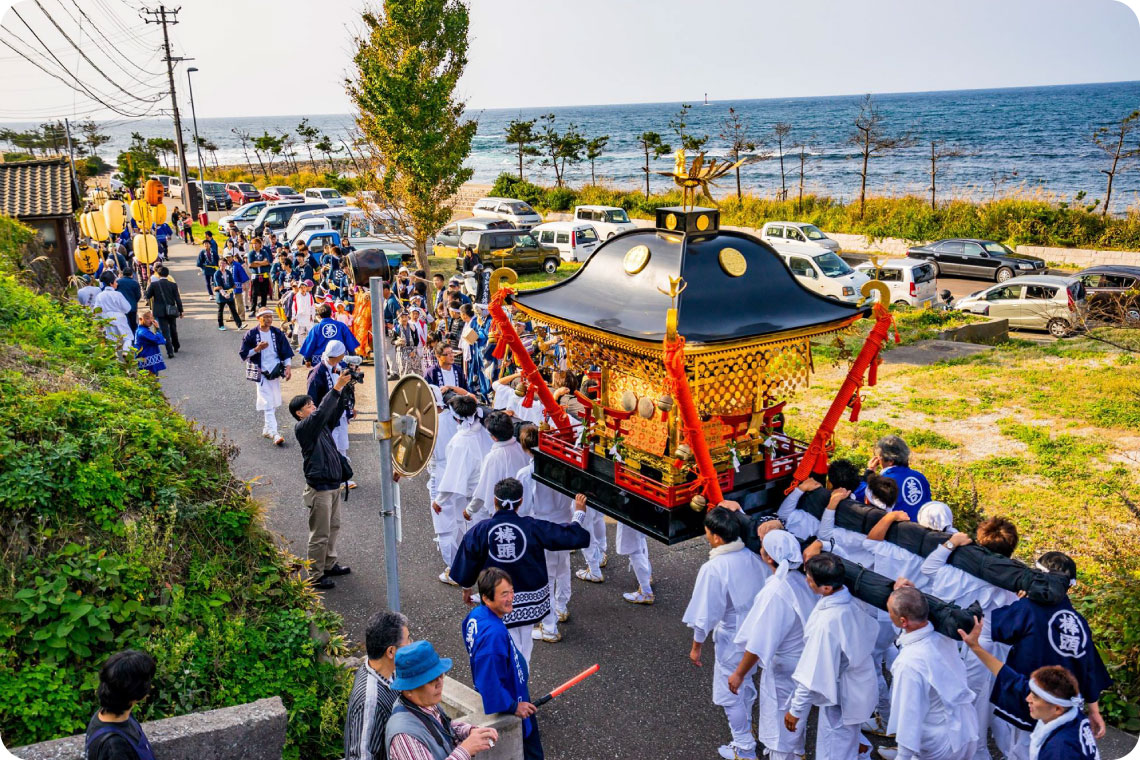
Stately and gorgeous portable shrine procession (Designated Sado Intangible Folk Cultural Asset)
Utou Shrine Festival
Utou Shrine
The dynamic portable shrine procession, parading through the streets and accompanied by calls of encouragement like, "Chosaya!" makes an impressive scene, along with thousands of paper lanterns and the echoes of a conch-shell trumpet. The taiko drumming of the Ondeko (deity mask dance) in this area is said to originate from mimes imitating miners' movements of digging for ore at gold and silver mines. A performer wearing a mask of an elderly man dances to the rhythm of a taiko drum, holding a square, wooden measuring cup and a persimmon.
Place: Aikawa, Sado City
Information: October 19th every year
-
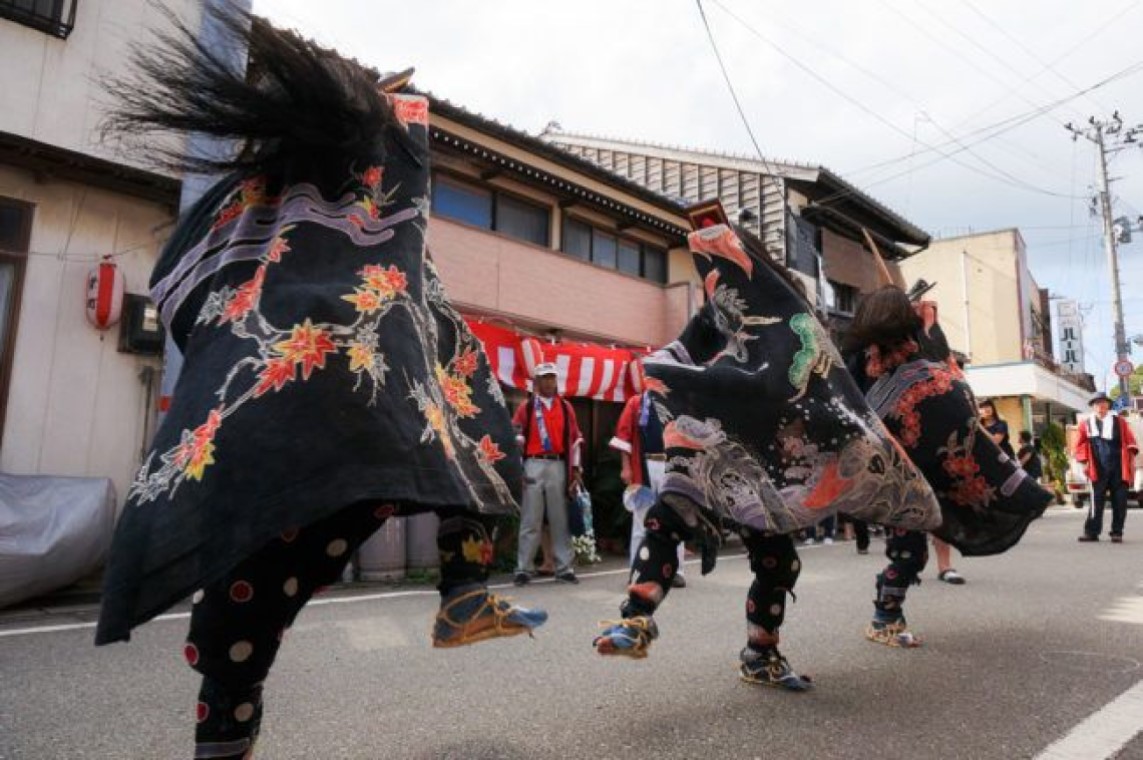
Similar to the deer dance found in the Tohoku region (Designated Sado Intangible Folk Cultural Property)
Kojishimai (Little Deer Dance)
Kojishimai (Little Deer Dance)
This tradition is believed to have been brought from Fushimi Inari Shrine in Kyoto at the time of the founding of an Inari shrine. A trio of deer (a stag, a doe and a fawn) performs two styles of dance to two different songs: one is dedicated to the shrine, and the other is performed in town. Kojishimai can be seen in the Akadomari, Ryotsu and Aikawa areas, too.
Place: Ogi-machi, Sado City, etc.
Information: Dates vary from district to district.