


- View
-
 View History and Culture
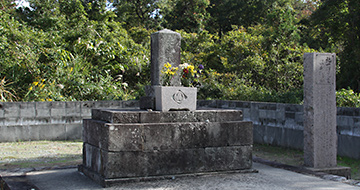
A gravesite of Kita Ikki
Shokoji Temple, close to Kita' birthplace in the Ryotsu Minato area, is a temple for deceased ancestors of the Kita family. His tomb is situated in the Aoyama Cemetary of Shokoji Temple, overlooking the rural landscape of Harakuro (Shiizaki). Although Kita Ikki was a leading thinker and socialist from the Meiji to early Showa times (early 20th century), many people still visit and lay flowers on his grave.
Ryotsu area -
 View Nature and Best Views
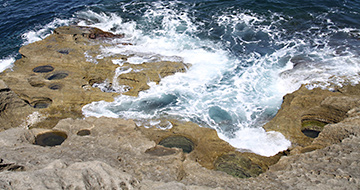
A group of marine potholes in Hiranezaki
Thousands of round holes can be seen on the slope of rocks stretching approximately 500m on Hiranezaki Coast, situated to the north of Senkakuwan Bay. This is the largest group of potholes in Japan, formed by the whirl of sea water, and these potholes are designated as Japan's natural monument. Pebble can be seen in the holes, and those pebbles whirl around in the turbulence of waves and accelerate erosion. Hot water is bubbling up from the sea bed offshore, and that is a renowned spot popular for divers.
Aikawa area -
 View Sightseeing
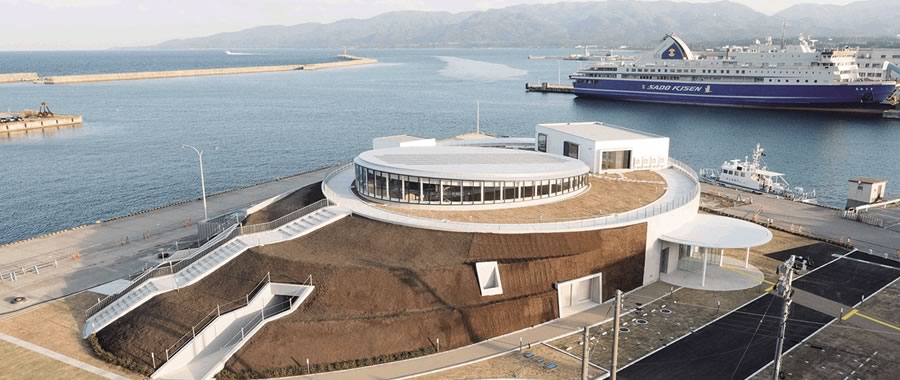
Ai-port Sado
Five minutes walk from Ryotsu Port, the front gateway to Sado Island.
Ryotsu area -
 View Sightseeing Hands-on Experiences
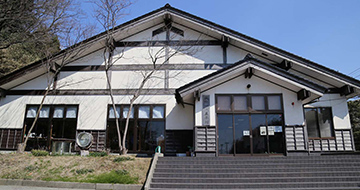
Aikawa Gino Densho Tenjikan (Aikawa Traditional Skills Museum)
Aikawa Gino Densho Tenjikan offers opportunities to learn about traditional art handed down from generation to generation in Aikawa. The museum offers hands-on experiences of Mumyoiyaki, an art which uses potter's clay produced in the gold mine, and rag-weaving on a traditional back-strap loom with careful instruction by staff members. Pottery by artists in Sado, rag-weaving works, and Bunya puppets are on display. The museum sits right in the middle of the tourist area with Kitazawa Flotation Plant and Aikawa Folk Museum.
Aikawa area -
 View
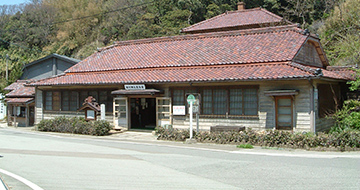
ViewAikawa History Museum
Founded in 1956, the building of the Aikawa History Museum is a converted Sado branch building of the imperial office (which manages imperial property under the Meiji Constitution), and this is why the roof tiles bear the Imperial Seal of a chrysanthemum. This building is designated a National Historic Site. The three-story exhibition halls display materials related to the gold mine and the Sado Commissioner's Office, tools used by courtesans in Aikawa, art work, folk materials, and archeological objects. Explore the rich history of the town which developed along with the silver and gold mines.
Aikawa area -
 View Sightseeing
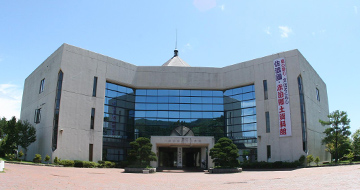
Akadomari Folk Museum
Akadomari Folk Museum is housed in the Akadomari Sogo Bunka Kaikan (Cultural Centre). You will be welcomed by a parade float called the "Odori Yatai (literally: dance float)", which imitates a festival. The 1st exhibition room introduces festivals from all over Sado, such as deity mask dance. In the 2nd exhibition room, folk materials collected from the Akadomari area will give you insight into the history of the villagers' struggles. There is a special section featuring Kaitaro Hasegawa, a native of Akadomari who was a very active novelist under three pen names: Fubo Hayashi, Itsuma Maki, and Joji Tani.
Minami Sado area -
 View Hands-on Experiences
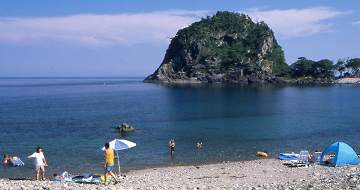
Akagame Kazashima Nagisa Park Beach
The stretch of Maehama Coast has a beautiful, gentle coastline. The beach opens out to a scenic park, where gigantic rocks "Kazashima Benten" and "Akagameiwa (Red Turtle Rock)" lie. Just off the Sado's Ring Road, the crystal clear water and beautiful pebbles of the beach await for you, allowing you to have an experience as though you own a private-beach! There is a turf-fitted campsite within the park as well.
Ryotsu area -
 View History and Culture Nature and Best Views
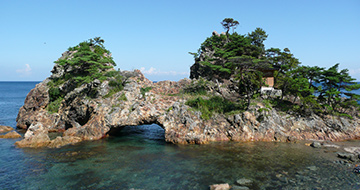
Akagameiwa Rock
Akagameiwa is a big, red stone of iron quartz, which can be seen from a bathing beach in Akagame Kazashima Nagisa Park. The rock has a hollow in the middle, and the shape resembles to parent and child nestling up together. "Once upon a time, when a fisherman in Suizu encountered a turbulent sea, a big turtle appeared, and the fisherman and his boat rode on the turtle's back and returned to the port. The turtle turned into a rock, and villagers named the rock "Akagame". The rock has this folk story, and there is a shrine to enshrine Akagame Myojin god.
Ryotsu area -
 View History and Culture
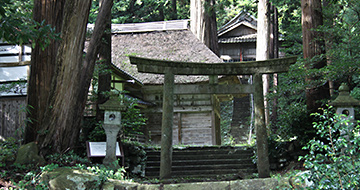
An'yoji Haguro Shrine
An'yoji's Haguro Shrine is said to be a shrine to where the god divided from Haguro Shrine, in Yamagata Prefecture, was invited and re-enshrined in 772. It is surrounded by gigantic cedar trees, and the main hall lies in harmony with the surrounding lush woods. Since olden days, in the small village of An'yoji, Noh has been offered in place of Ondeko (deity mask dance) in the annual, most important festival. The Noh stage (a Niigata Prefectural Tangible Cultural Asset), with its thatched, hipped-roof, is reputed to have been built in the late Edo Period (19th century). It used to stand across the front path from the main building of the shrine, but around 1909, it was relocated to, and enlarged, on the site where it now lies. The Noh stage at Haguro Shrine is the smallest in Sado, among the ones still in existence.
Kuninaka area -
 View History and Culture
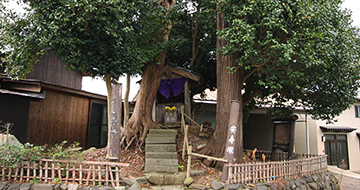
Anjuzuka (Memorial Mound of Anju in Hatano)
Two different versions of the folk tale "Anju and Zushio" have been passed down from generation to generation in Sado. Hatano is arguably the place where Anju passed away while on her way to Kyoto, after she and her brother had a reunion with their mother. This mound is said to be the burial place of some of her mementos such as her favorite comb. It has been worshipped for good harvests, and for miracles in finding a partner and healing eye diseases. Anju Tenjin Festival takes place every summer.
Kuninaka area -
 View History and Culture Nature and Best Views
Benkei no Hasamiiwa
Benkei no Hasamiiwa is a peculiar sight located on seashore in Shimoaikawa, along Prefectural Route 45. A wedge-shaped rock is stuck between two giant rocks. Once upon a time, Sado Benkei and his company mountain priests were making their way to Mount Kinpoku for ascetic training, when a demon appeared in an ambush and requested a contest of strength. Sado Benkei threw rocks in the air, and the rocks are said to be thrown onto the beach in Shimoaikawa. A grave of a consummate governor of Sado, Ichizaemon Shizume adjoins the beach.
Aikawa area -
 View Nature and Best Views
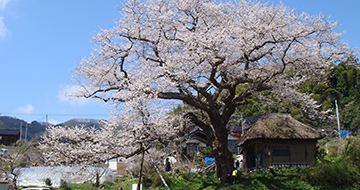
Cherry Tree of Hojobo
The cherry tree of Hojobo sits in Hamochi Osaki, a place known for the Osaki Soba (buckwheat noodles) Festival. Branches stretch out as if they are cuddling up to the thatched roof house on the site where Hojobo Temple used to be. The tree is said to be 250–260 years old, measuring 21 meters tall and 6.9 meters in circumference at its base. The crown stretches 26 meters both east-to-west and north-to-south. The tree marks the timeline of farmwork, and locals affectionately call it "Hojobo's sowing cherry."
Minami Sado area -
 View History and Culture
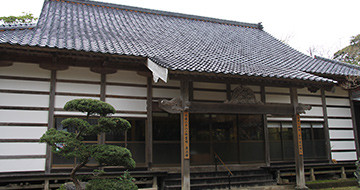
Chikoubo Temple
The historic old temple of Shingon School welcomes you with brilliant sculptures. It is said that the temple was established by Kuzan, a Buddhist monk, in 808, and the main object of worship is a1,000-armed Kannon Bosatsu (Guanyin: Goddes of Mercy). Seen on the sculpture of Sanmon Gate, Ebisu is the god of driving evil spirits away and bringing luck in. It has been greatly worshipped as a god of fishing and safety at sea to this day. The hall enshrining Konpira Gongen, a god of sailors, was founded in 1833 by Jinzaemon Takano, a master carpenter in the Murayama area. You will be overwhelmed by the sculpture, which richly embellishes the hall. Mahori Hogan Yoshitaka, a master artist, donated his painting entitled "Kurasaki Ebisuten" to this temple.
Kuninaka area -
 View History and Culture
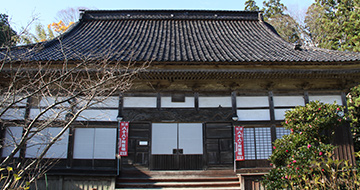
Choanji Temple
Located in the Kujikawachi village, Choanji Temple is said to have been founded in 831, and has a wooden seated statue of Amitabha and a bronze bell in its storehouse, both of which are designated as Japan's Important Cultural Properties. The statue is said to have been made in the late Heian Period (the 12th century). The bronze bell was pulled up from the bottom of the sea in Wakasa (present-day Fukui Prefecture) around the 13th century, and it is said to have later been dedicated to Choanji Temple. It is one of the forty-seven so-called Korean bells still in existence in Japan, and this is the only one of its kind in Niigata Prefecture. It is 107.5 cm tall and 61.2 cm diameter. The elaborately designed dragon-shaped handle at the top of the bell and the arabesque pattern are striking.
Ryotsu area -
 View History and Culture Nature and Best Views
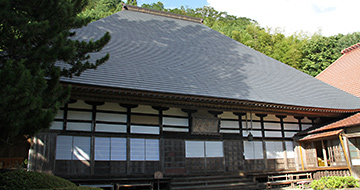
Chokokuji Temple
Founded by Kobo Daishi (Kukai) in 807, Chokokuji Temple is an ancient temple which imitates Hasedera Temple in Yamato (present-day Nara Prefecture). The temple is where Zeami paid a visit after landing on Sado Island, and he mentioned the temple in his book Kintosho (Writings of the Golden Isle). The temple is also known as a temple of flowers, including peony. Chokokuji Temple owns a large number of cultural assets which shadow living history, varying from three Eleven-Headed Kannon Statues (National Important Cultural Properties), to statues of Kongo Rikishi (two wrath-filled guardians of the Buddha) made in the Heian Period (10th-12th centuries), as well as Gochido Hall. Within the grounds, there are also three cedar trees and Japanese Umbrella-pine trees, both of which belong to Niigata Prefecture's Natural Monuments.
Kuninaka area -
 View History and Culture Nature and Best Views
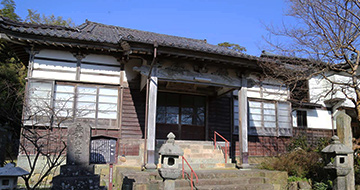
Daianji Temple
Daianji was established in 1606 by Nagayasu Okubo, the first Commissioner of Sado. A long, beautifully cobbled path leads up to the Sanmon gate, and the main hall features the temple crest of three leaves of hollyhock in a circle. The temple houses a memorial tower built by Nagayasu Okubo prior to his death, and a memorial tower for Hikozaemon Kawamura who was involved in the early-stage development of the Sado gold and silver mines. Both towers are National Historic Sites. This temple also holds the burial grounds for officials who served the Sado Commissioner's Office. A spectacular Machilus thunbergii (bay tree) grove, a Sado Natural Monument, stands behind the graveyard. Drastic urbanization due to the development of the mines significantly changed the landscape of the Aikawa area. Still, groves within the grounds of temples and shrines retain their native vegetation. Many plants such as the giant Machilus thunbergii, camellia and Euonymus japonicus (Japanese spindle) grow in the dense natural woodland of Daianji Temple.
Aikawa area -
 View History and Culture
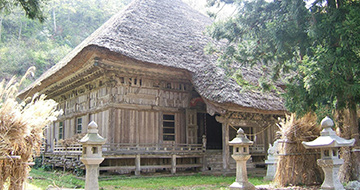
Dainichido
Dainichido is a worship hall in Ohirume Shrine, which is considered to have been established in 1490. The existing building (a Niigata Prefecture's Designated Tangible Cultural Asset) was reputedly reconstructed in 1718. The hall enshrines a statue of Seated Dainichinyorai (Vairocana), considered to be created by Mokujiki Seigen. Seen as a place of worship for a tutelary deity of cows, in the past, cowherds from all over the island traveled on foot with their cows, to pay visits to Dainichido. Many ema (wooden plaques with prayers written down on them) with pictures of cows, and waraji (straw sandals) for cows are dedicated to make wishes come true.
Kuninaka area -
 View History and Culture
Dairenji Temple
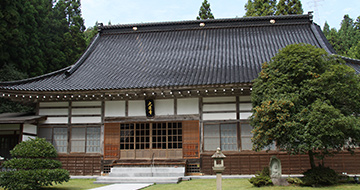
Dairenji Temple is a temple of the Soto Zen school of Buddhism established in 1421 as a temple to take care of ancestors of the Honma clan, Lords of Hamochi Castle. The sanmon main gate is the east gate of the castle (Niigata Prefecture's Historic Site), which survived destruction in a siege by Kagekatsu Uesugi (lord of Echigo), and was later relocated. This temple served as accommodations for successive Deputies for Sado and officials in the Edo Period (1603-1867). Within the precinct, there are the 500 Arhats Hall, created by a sculptor of Buddha statues in the Edo Period; Kannondo Hall, enshrining a secret Buddhist icon, Maria-Kannon (Mary statue in Kannon disguise); and Hotei (god of good fortune) Hall worshipped for wealth and happiness. Mahori Hogan Yoshitaka, a master painter, donated his painting, entitled "Amazawa Hoteison." Dairenji Temple is one of the temples on Sado's Seven Gods of Fortune pilgrimage route. Referred to as a temple of camellia flowers, Dairenji Temple is familiar to locals,
Minami Sado area -
 View History and Culture
Daizen Shrine
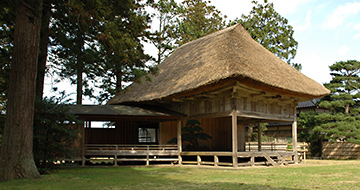
Daizen Shrine sits in a rustic setting resembling the landscape of Asuka in Nara Prefecture. Honma Yamashironokami, the manor's lord, initiated the enshrinement of Suketomo Hino (an exiled court noble) and Daizenbo (an ascetic hermit) together, while Miketsuokami (the god of food) is enshrined at the main building. When Kumawakamaru, the son of Suketomo Hino, came over to Sado to revenge his father's death by execution, Daizenbo helped him escape and was, consequently, executed. This shrine reputedly houses Daizenbo in order to calm his revengeful ghost. Reconstructed in 1846, the Noh stage with its thatched and hipped roof (designated a Niigata Prefecture Tangible Folk Cultural Asset), is one of the four Noh stages in the Kuninaka area where Noh performances were regularly held. It is said to be the oldest Noh stage still in existence in Sado. At present, Noh performances are offered at a festival on the 18th of April; and in June, Noh and Sagi School's Kyogen performances take place.
Kuninaka area -
 View Hands-on Experiences
Dive Shop and School Freeway, Sado Branch
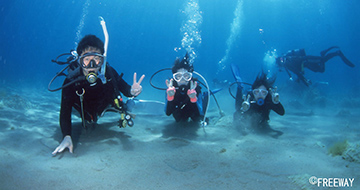
Dive Shop & School Freeway is located in the Sawata area in central Sado. They offer advice for everyone, from novice to expert. You can get your diving certification, through PADI licensing courses, after 3 to 4 lessons. Freeway offers personal instruction according to each participant's level and purpose, and provides introductions to various kinds of diving. You will be guided into the beautiful sea as it changes with the seasons.
Kuninaka area -
 View Hands-on Experiences
Diving Service F.WAVE
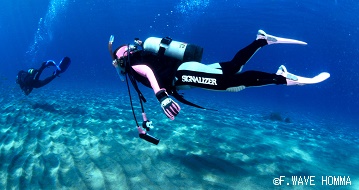
F.WAVE guides you to the best diving spots according to the state of the sea and also offers trekking tours mainly in the Osado Mountains. F.WAVE's style is to keep guests in small groups so that they can be guided with special attention and instruction through the eco tours. F.WAVE's reception desk is on the second floor of Sado Kisen Ryotsu Ferry Terminal from April until November, and offers rental services outdoor goods and sells them too.
Ryotsu area -
 View History and Culture
Doyu no Warito
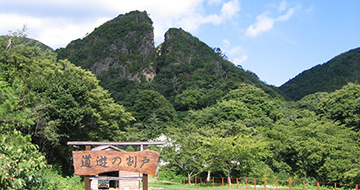
Doyu no Warito is a relic of opencast mining from the Edo Period (1603-1867), which is said to be a pit in the early stages of the development of Sado's gold and silver mines. As the digging went deeper and deeper to extract more gold ore, the mountaintop was split into a V-shape. The crack on the summit reaches approximately thirty metres in width and seventy-four metres in depth. The mountain with the crack holds a mother lode of gold, stretching about ten metres wide, called the Doyu Vein, and after the Meiji Period (1868-1912), large-scale development was carried out under the Warito.
Aikawa area -
 View Nature and Best Views
Exchange Centre Hakuundai
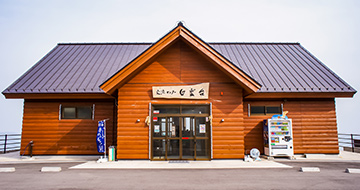
Hakuundai is a lodge-style building standing at about 850 metres above sea level. The viewing terrace offers a stunning panoramic view across Sado, including Ryotsu Bay, Kuninaka Plain and Ogi Peninsula. At the souvenir shop inside the building, you will find Sado specialties, such as "Okesa persimmon butter", "fig jam", and "wild grape wine". Curry over rice with the Island's black Berkshire pork, and soft ice cream made from fresh cream are special menu items at the light meal corner. Hakuundai is closed for winter as Osado Skyline will be closed due to snow.
Kuninaka area -
 View History and Culture
Former Aikawa Detention Center
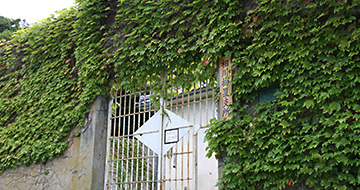
Up the hill on Kyomachi Street in Aikawa, you will see an ivy-covered three-metre high concrete wall. Former Aikawa Detention Center was opened as a branch of Niigata Prison in 1954, and was in use until 1972 when it was relocated in the Sawata area. Designated as Japan's Tangible Cultural Property, this is a wooden detention house still in existence, which is rarely found in Japan. Former Aikawa Detention Center is open to the public and free of charge, so you can take a look around.
Aikawa area -
 View Hands-on Experiences
Fusubemura
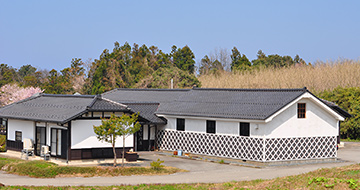
Fusubemura is a hands-on learning centre located in Kodomari, with an accommodation available on-site. One cottage contains a dining room, living room and bedrooms for five people, and this is perfect for families and groups of friends. While staying in the spacious centre, you can enjoy making your original pieces of work in workshops including classes for pottery, rag-weaving, bamboo craft, etc. The surrounding natural environment such as Sobama Bathing Beach is also fascinating.
Minami Sado area -
 View Nature and Best Views
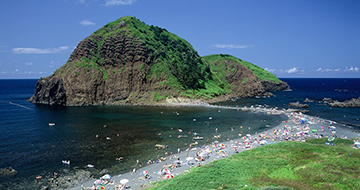
Futatsugame
Futatsugame resembles two turtles nestling closely and the scenery changes according to the tide. The water around Futatsugame is the clearest in Sado, and Futatsugame Bathing Beach has been selected as one of the Top 100 Sea-Bathing Spots in Japan. Futatsugame is also listed with two stars on the Michelin Green Guide, along with Onogame.
Ryotsu area -
 View Hands-on Experiences
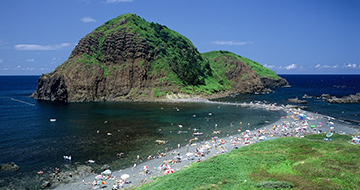
Futatsugame Beach
As you walk down the parking area, you will reach the Futatsugame Bathing Beach, a popular spot where you can enjoy sea-bathing up close to the Futatsugame Rocks. The crystal clear water and beach have been selected as one of the Top 100 Sea-Bathing Spots in Japan, and was awarded two stars by the Michelin's Green Guide. The beach has stunningly clear water and is a beautiful scenic spot. There is a campsite and the SADO Futatsugame View Hotel adjoining the beach, making it an ideal base for exploring Sotokaifu.
Ryotsu area -
 View Sightseeing Hands-on Experiences History and Culture
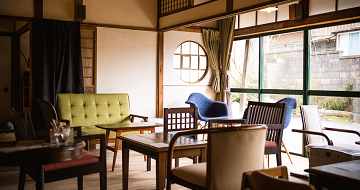
Gashima Cinema
Gashima Cinema is located on historical Kyomachi Street, which connects Sado Gold and Silver Mine with the Sado Commissioner's Office. This former residence of the Sado Gold Mine captain, built about 80 years ago, has been converted into a café while maintaining the ambiance of the olden days. A monthly featured film is shown daily, and a monthly book corner provides movie-related books. An old carbon arc film projector, which was once used at an actual movie theatre, is on display. This spot is perfect for a break on a stroll through history, in the old mining town of Aikawa.
Aikawa area -
 View Nature and Best Views
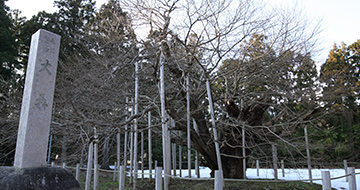
Giant Aino Mulberry in Hayoshi
As an island of silk-farming using Aino mulberry leaves, Sado used to boast the top sericulture industry in Niigata Prefecture. This giant, ancient Aino mulberry tree is estimated to be 1300 years old, measuring 9 meters tall and 5.2 meters around the base. The trunk divides into four branches, and the crown spreads 18 meters. Hayoshi's Aino mulberry tree is one of the three great mulberry trees in Japan, together with one at Ebisu Shrine in Otaru City, Hokkaido, and another in Usune, Numata City, Gunma Prefecture.
Ryotsu area -
 View Nature and Best Views
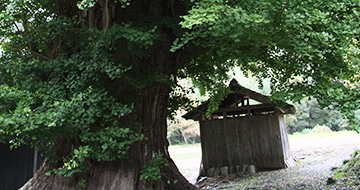
Giant Ginkgo in Niibo Ono
This giant ginkgo stretches its branches in the garden of a house in front of Seisuiji Temple, and locals affectionately call it "Seisuiji's Giant Ginkgo." Ginkgo trees have either male or female flowers, and this giant ginkgo is a male. An estimated 1,000-years old, leaves sprout every spring and turn golden yellow in autumn. Measuring 29.5 meters tall and 16.7 meters in circumference at the base, the crown spreads approximately 19 meters both east-to-west and north-to-south.
Kuninaka area